
TOXIC DECOMPOSITION PRODUCTS
Inger Anderson, executive director of the United Nations Environment Programme, said: “A major concern is the fate of plastic breakdown products, such as microplastics and chemical additives, many of which are known to be toxic and harmful to human and wildlife health and ecosystems. “
The human body is susceptible to plastic pollution in water sources in multiple ways, which can lead to hormonal changes, developmental disorders, reproductive abnormalities and cancer. Plastics are ingested through seafood, beverages, and even table salt; when suspended in the air, they can be inhaled and penetrate the skin.
SIGNIFICANT ECONOMIC IMPACT
Ocean plastic pollution also has a major impact on the global economy. In 2018, the global cost of ocean plastic pollution to the economy from the impact of tourism, fisheries and aquaculture, and other costs such as clean-up costs was estimated to be at least US$6-19 billion. Businesses could face $100 billion a year in financial risk by 2040 if governments require companies to pay for waste management costs based on expected volumes and recyclability. Large amounts of plastic waste can also lead to an increase in illegal domestic and international plastic disposal.

DON’T USE DESTRUCTIVE ALTERNATIVES TO PLASTIC
The report warns against the use of single-use plastic products and other damaging alternatives to plastic products, such as bio-based or biodegradable plastics, which currently pose a chemical threat similar to conventional plastics.
The report examines serious market failures, such as the low price of virgin fossil fuel feedstock compared to recycled material, a disconnect between informal and formal plastic waste management efforts, and a lack of consensus on a global solution.
COMPREHENSIVE GOVERNANCE
UNEP is calling for an immediate reduction in plastic use and encourages a transformation across the plastic value chain. This will require further investment in stronger and more effective monitoring systems to determine the source, scale and fate of plastic, and developing risk frameworks, which are currently lacking globally. Ultimately, a shift to circularity is necessary, including sustainable consumption and production practices, accelerated development and adoption of alternatives by businesses, and increased consumer awareness for more responsible choices.

WASTE PLASTIC RENEWABLE ENERGY TECHNOLOGY
Waste Carbonization Resource Recovery and Treatment Technology
The focus of waste treatment and disposal is to stabilize, reduce, and detoxify waste. Therefore, heat treatments such as incineration and pyrolysis have become the mainstream of waste recycling. However, from the point of view of resource and energy recovery, although waste heat can be recovered by incineration, it still fails to make good use of the potential energy and recyclable resources in waste, so it is not suitable to incinerate. . Therefore, the current development trend of waste heat treatment technology has gradually transformed from incineration technology to waste carbonization treatment technology, which allows organic substances to undergo carbonization reactions, and recovers their energy and reusable resource products. In this way, for each region, not only can the dependence on external resources be reduced, but also the waste disposal load can be effectively reduced, and the service life of the landfill site can be extended.

WASTE CARBONIZATION RESOURCE RECOVERY AND TREATMENT TECHNOLOGY
Since the carbon content of some organic substances is transformed into carbonaceous substances, it can not only be used as an alternative fuel, but also can reduce CO2 emissions due to the treatment process, which is in line with the trend of global control of CO2 reduction. Therefore, in recent years, advanced countries in the world have focused their research on carbonization technology to deal with various wastes.
When planning, designing, constructing, and operating a waste carbonization resource plant, the following materials and data must be available as important parameters for design, such as: waste composition analysis; waste storage methods, feeding methods, and Feeding rules; operating temperature and heating method; system air tightness and oxygen deficiency; reaction time; bottom ash and fly ash composition analysis; generated flue gas composition and flue gas volume; air pollution prevention and control equipment process configuration; system operation operation, maintenance and troubleshooting; and economic benefit evaluation.

CARBONIZATION TECHNOLOGY INTRODUCTION
Carbonization reaction can be divided into low temperature and high temperature. At a low temperature of 200~500°C, the whole procedure is controlled by the reaction rate, because the activation energy required for the carbonization reaction at low temperature is very large, so the reaction rate is very slow. At high temperatures below 800°C, the process is controlled by the diffusion rate.

WASTE CARBONIZATION RESOURCE RECOVERY AND TREATMENT TECHNOLOGY
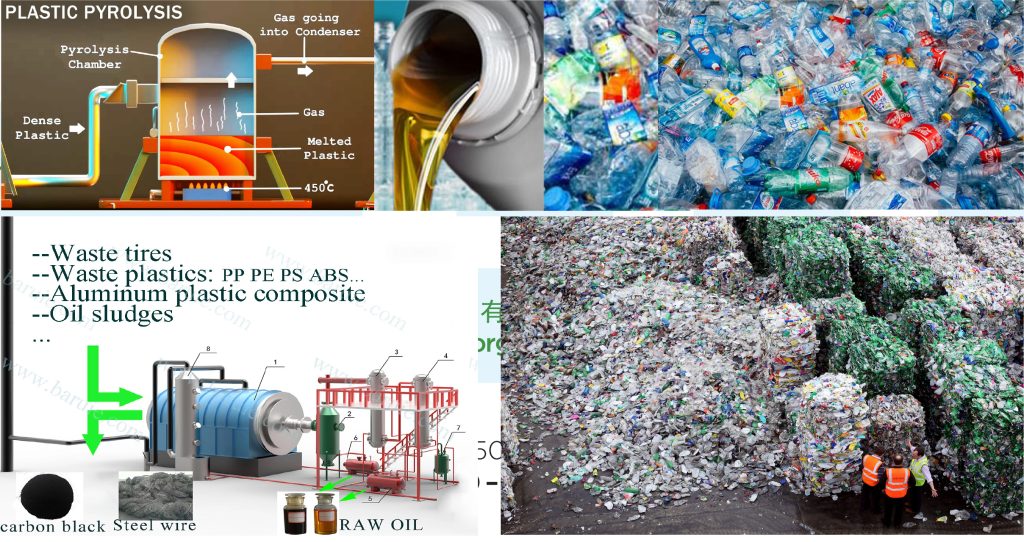
The carbonization reaction is essentially a thermal cracking reaction, which is a chemical decomposition reaction produced by heating solid or liquid organic substances in an oxygen-deficient environment (usually at 400~600°C) to break or destroy the chemical bonds of the organic substances. After the bond breaking reaction occurs, the molecular chains of some organic substances will be reorganized in an appropriate environment to form new organic substances. In addition, part of the organic matter remains in a low-molecular state. After a series of physical and chemical reactions, solid residues including gaseous carbon oxides, water vapor, and coke and ash containing fixed carbon are produced. After a proper condensation process, some products in the gas phase will appear in the form of liquid oil and water. After the reaction, a solid residue including carbon oxides in the gas phase, water vapor, coke and ash containing fixed carbon is produced. After a proper condensation process, some products in the gas phase will appear in the form of liquid oil and water.
EXPERIMENTAL RESULTS
wire shavings, tire tires and waste rubber and other mixed wastes, after the carbonization reaction, the three-phase weight percentages of gas, solid and liquid are: solid 57.7%~59.9%, liquid 15.5%~ 18.6%, gas 21.8%~26.8%. The one with a faster heating rate will produce less gas and more condensate. Relatively, the one with a slower heating rate will produce more gas and less condensate. The condensate collected after carbonization is insoluble in water and is a dark brown liquid with a calorific value of about 9,800 kcal/kg.
Foam, wire scraps, waste tires, waste rubber and other combustible wastes have a greater weight loss of about 45% to 62% before and after carbonization. For the lost part, the gaseous state is mainly carbon oxides into gases with small molecular weights such as oxygen, methane, and ethane; the liquid state is mainly liquids with large molecular weights such as benzene, toluene, and aromatics. The proper operating temperature range is 300~600℃, and the residence time is 1~1.5 hours.

The solid matter after carbonization of scrap automobile waste contains about 30% coke, a carbon content of 43%, and a coke value of more than 4,000 kcal/kg. Moreover, metal substances such as iron and aluminum can be used as materials for resource reuse because they have not yet reached the degree of oxidation. Generally speaking, the carbonization reaction is more effective than the incineration technology in recovering the resources and energy contained in the waste (the recovery efficiency is 90% and 60% respectively). Gaseous substances can be directly recycled, and can also be converted into storable liquid combustible substances through the condensation process, increasing the flexibility of carbonized substance recycling. This technology can greatly reduce CO2 emissions, which is in line with the international trend of CO2 reduction.
